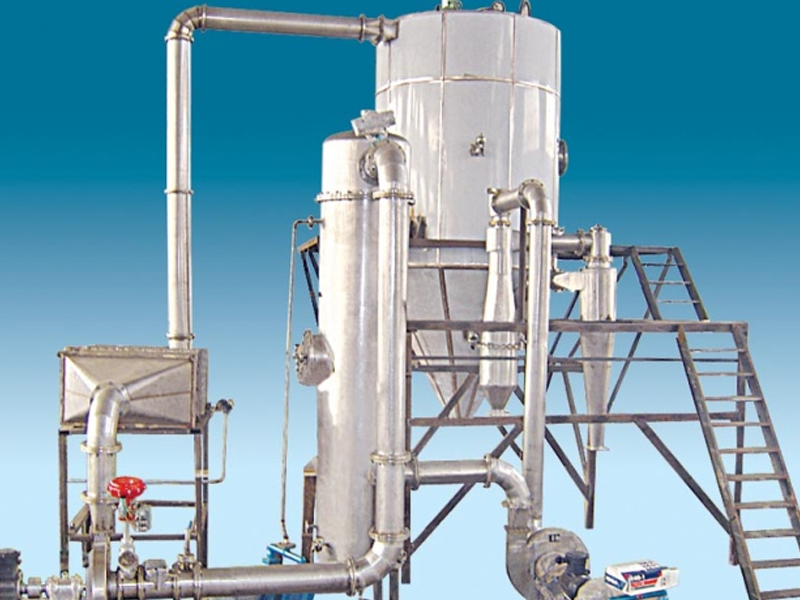
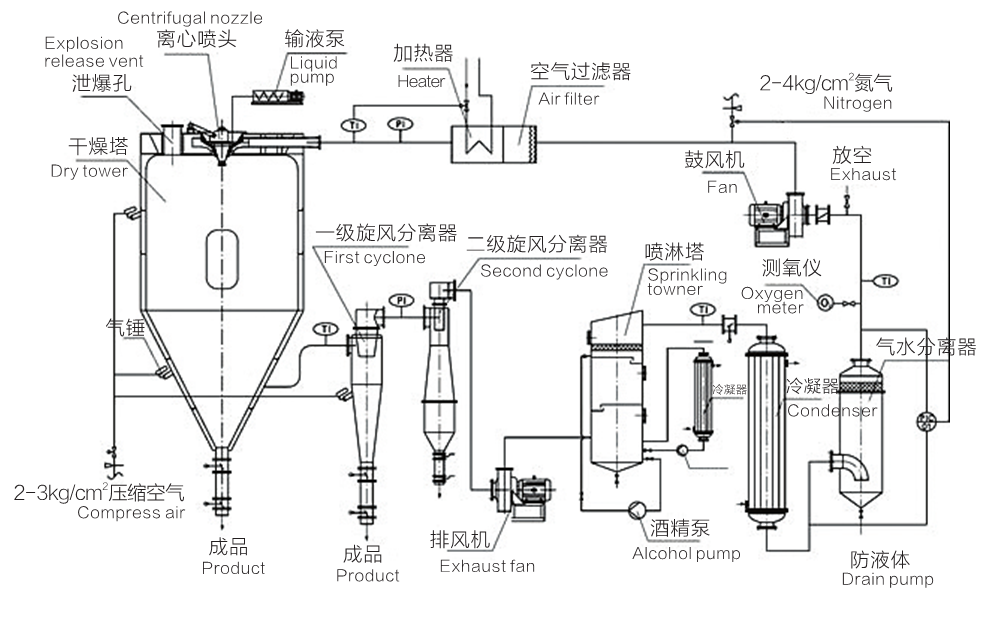
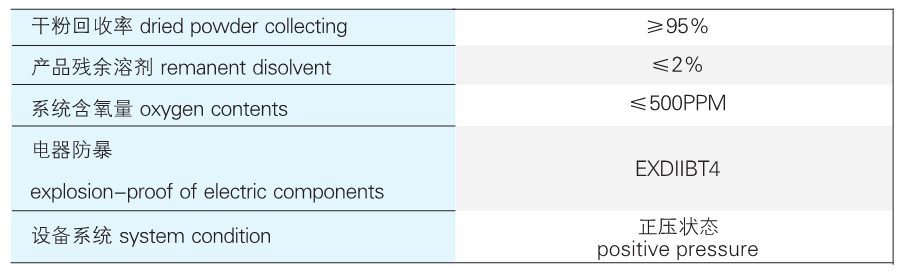
The closed-loop spray drying system operates in a sealed environment, using inert gas as the drying medium, typically N2. It is suitable for drying materials containing organic solvents, toxic gases, or materials prone to oxidation during the drying process. This system employs inert gas as the circulating gas, providing protection to the dried materials. The circulating gas undergoes moisture loading and dehumidification processes, allowing the medium to be reused. Nitrogen is heated by a heater and enters the drying tower. Liquid materials are transported to the centrifugal spray head by a screw pump, where the liquid is atomized into droplets by a high-speed circulating atomizer. The heat and mass exchange process is completed within the drying tower. The dried powdered materials are discharged from the bottom of the tower. The evaporated organic solvent gas, under the negative pressure of the fan, carries the dust entrapped in the gas through a cyclone separator and a spray tower for dust removal. The saturated organic solvent gas is then condensed into liquid by a condenser and discharged from the condenser. The non-condensable gas medium, after continuous heating, is reused as the drying carrier within the system. Conventional centrifugal spray drying achieves moisture removal through continuous air supply and exhaust, which is a distinct difference between explosion-proof closed-loop centrifugal spray drying equipment and ordinary centrifugal spray drying equipment. The drying medium in the drying system is N2, and the interior operates under positive pressure to maintain a certain positive pressure value. If the internal pressure drops, a pressure transmitter automatically controls the N2 inlet flow to ensure system pressure balance.
Previous:Food spray drying
Next:none!